Impartner — Business Planning
Setting-up and managing business plans.
Roles
- UX Design
- Page Copy
- Design System enhancements
Impartner Business Planning feature
Turning a time-consuming planning process into something partners would actually complete.
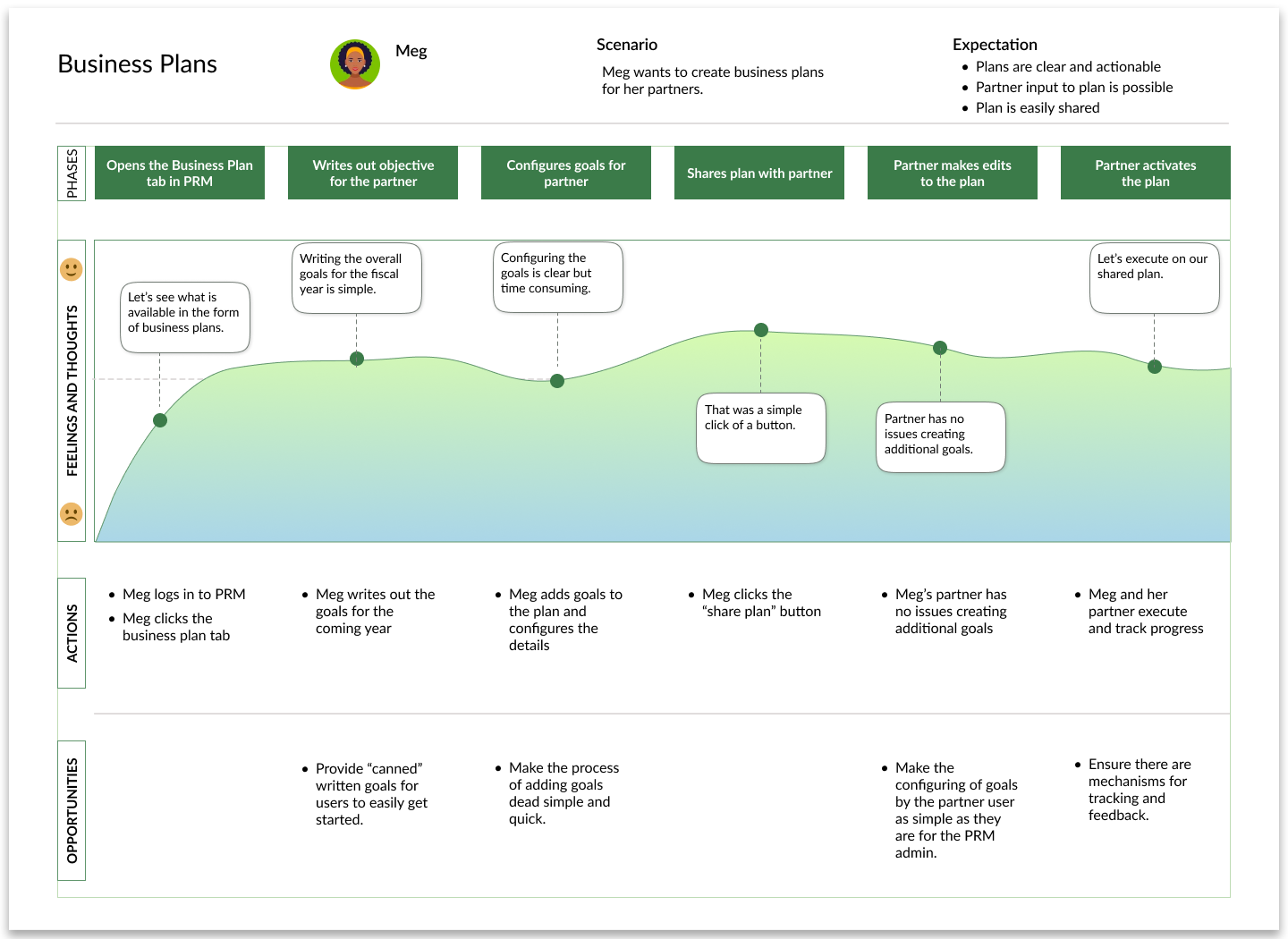
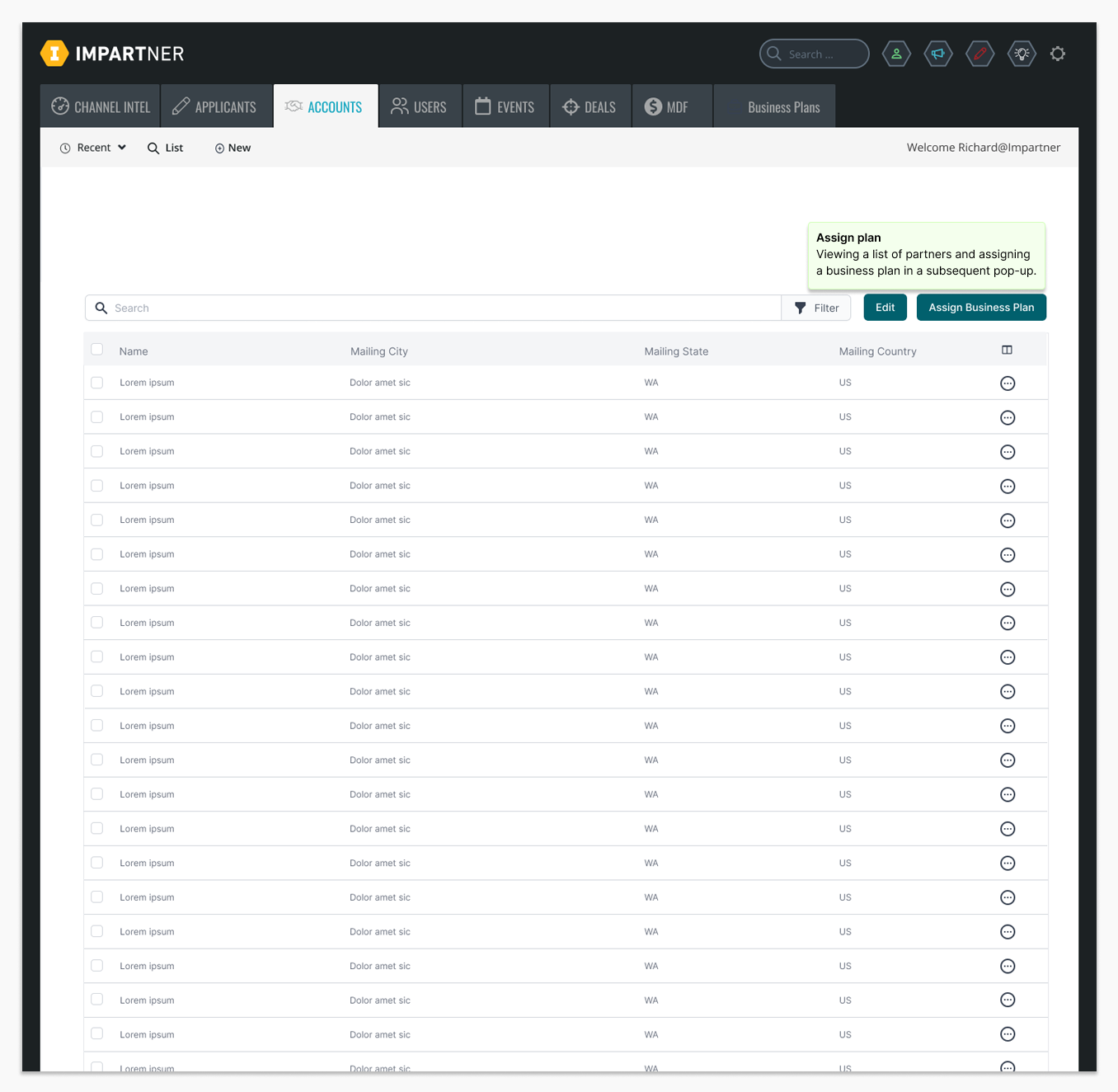
I inherited prior research and turned it into a clear picture of where users struggled in Business Plans. I created a proto-persona and journey map, then designed updates to support Quarterly Business Reviews inside the existing feature.
Working within the Impartner ecosystem also meant contributing to the design system that underpinned it. The team was working from a Tailwind-based foundation when I joined. I extended it by introducing grid conventions for layout consistency, clarifying and documenting typeface usage and hierarchy, and aligning design system language with the terminology already established by the Marketing team.
That last point mattered more than it might seem: when the words designers use to name components match the words the rest of the organization uses to describe the product, decisions move faster and reviews require less translation.
Key decisions
“The process of creating a business plan is very time consuming.”
— Interview subject
Outcomes
-
Plan completion rate
Baseline: Planning took long enough that partners avoided completing plans, leaving low signal submissions
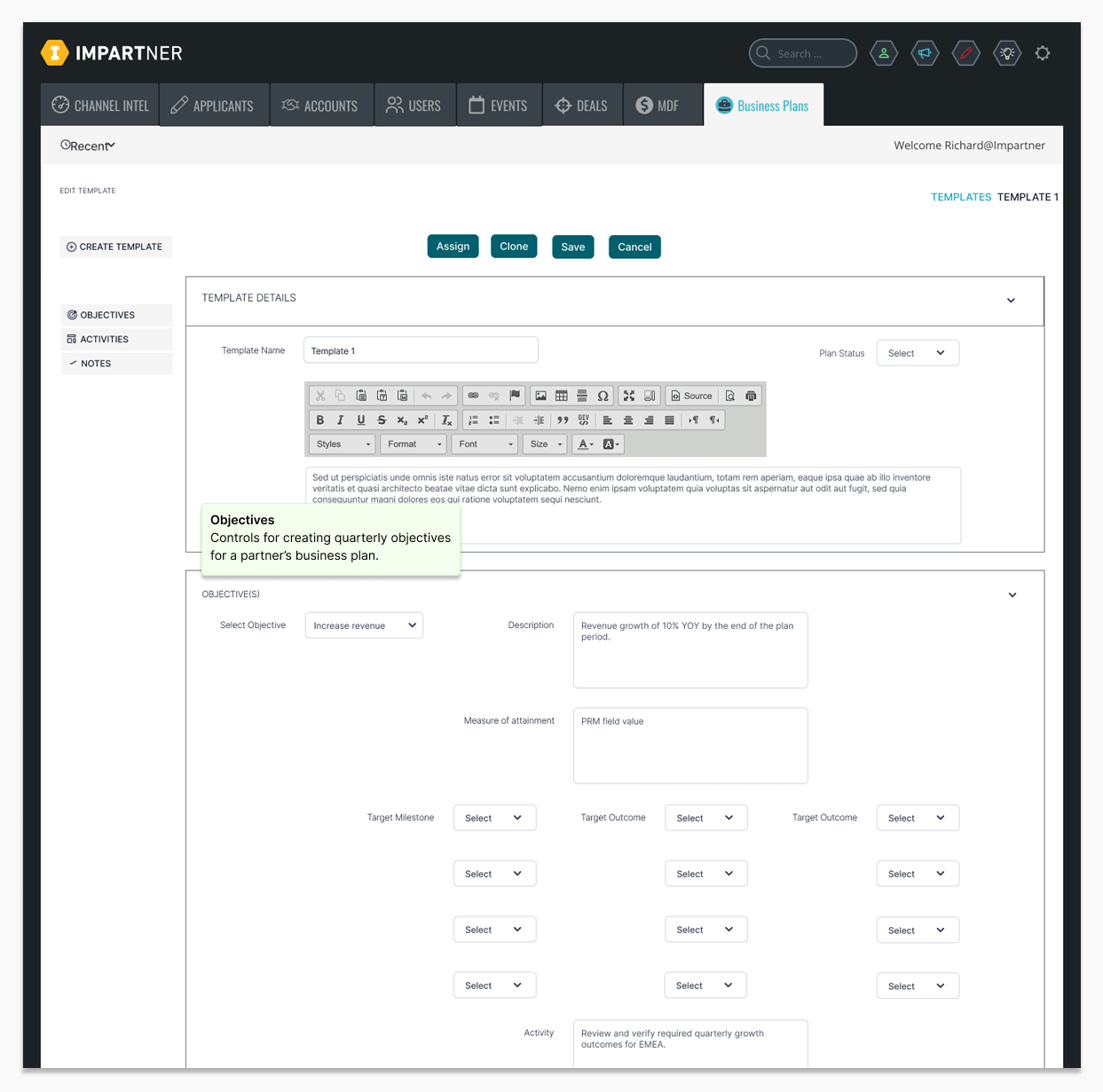
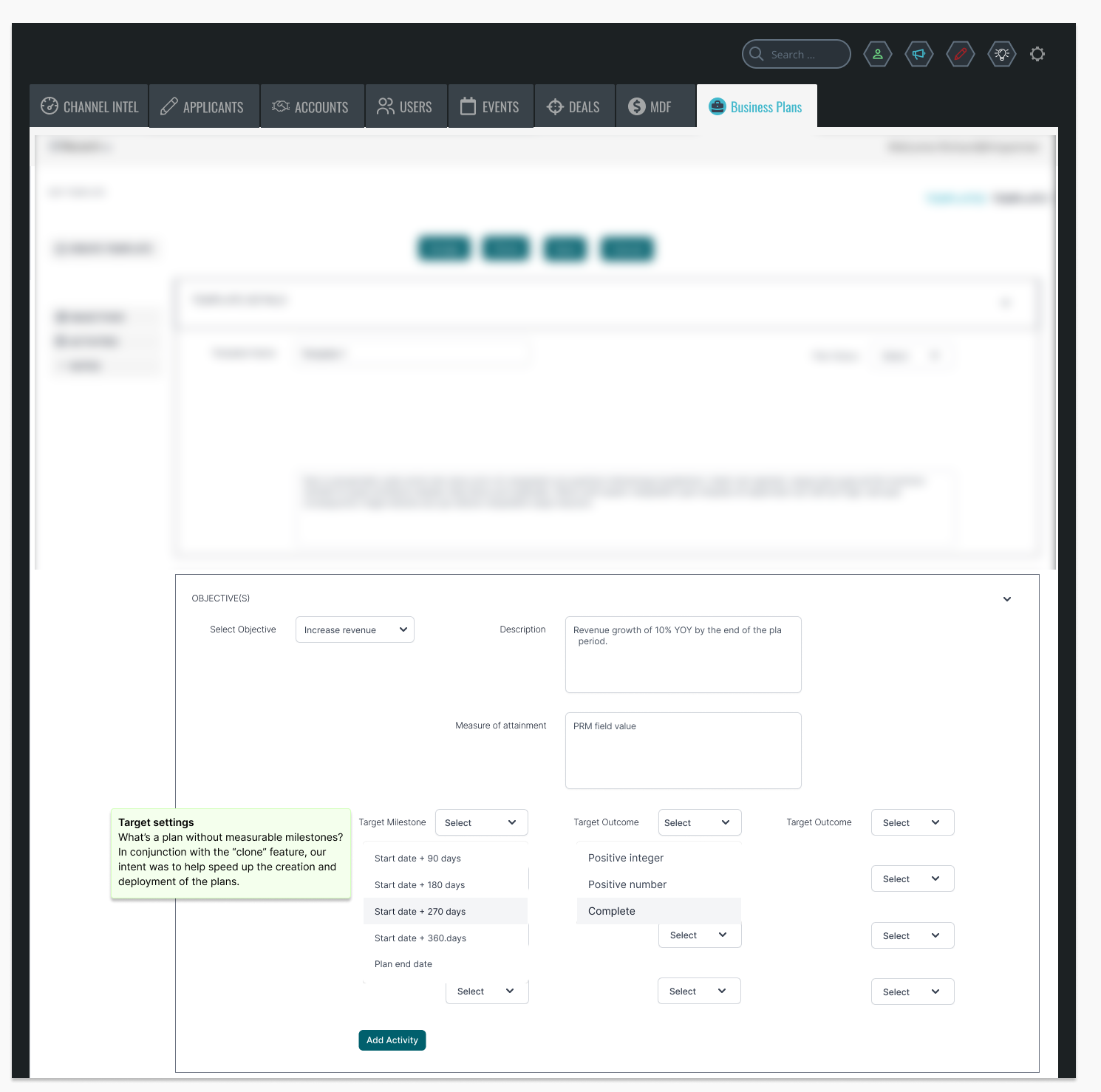
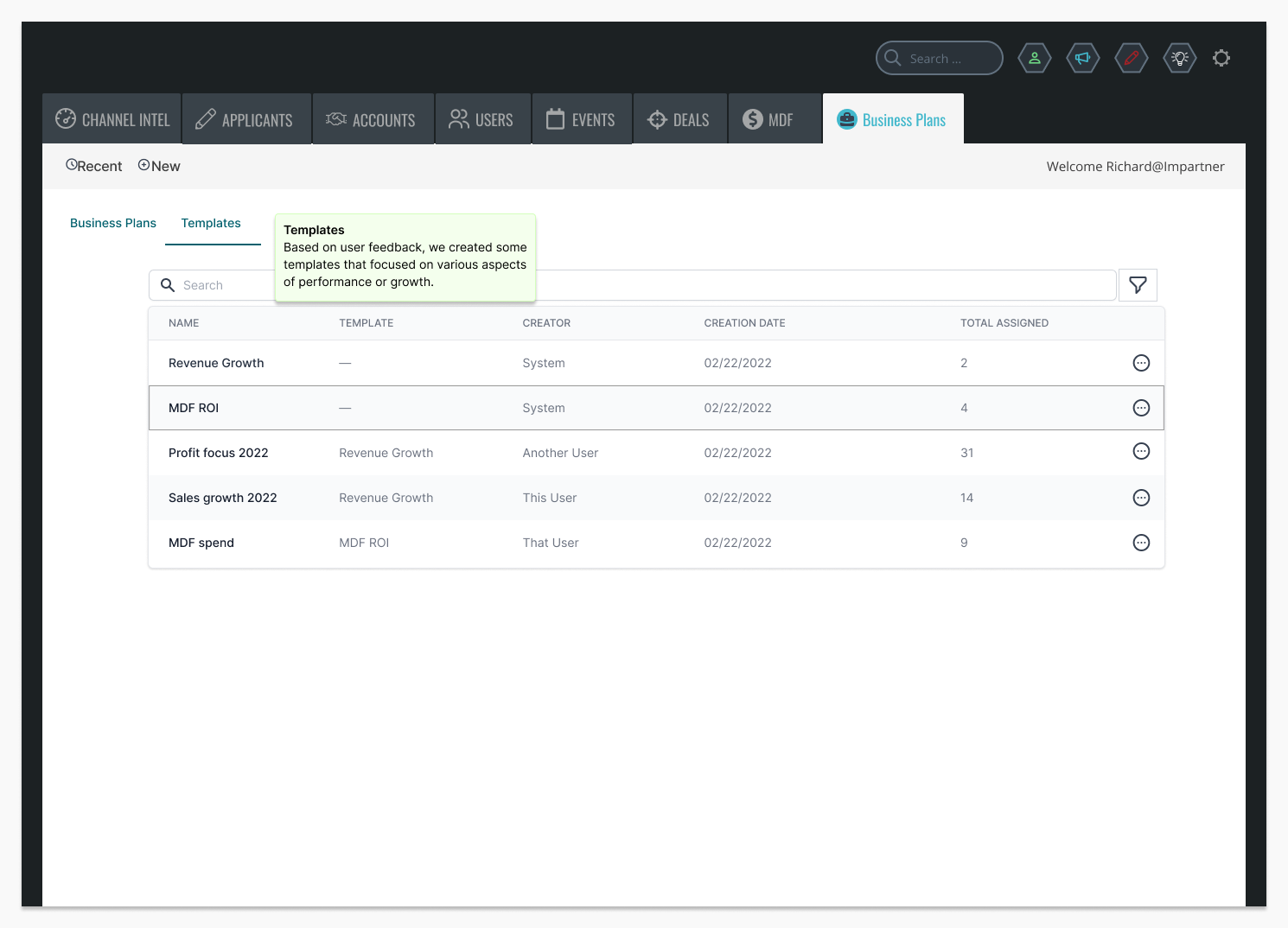
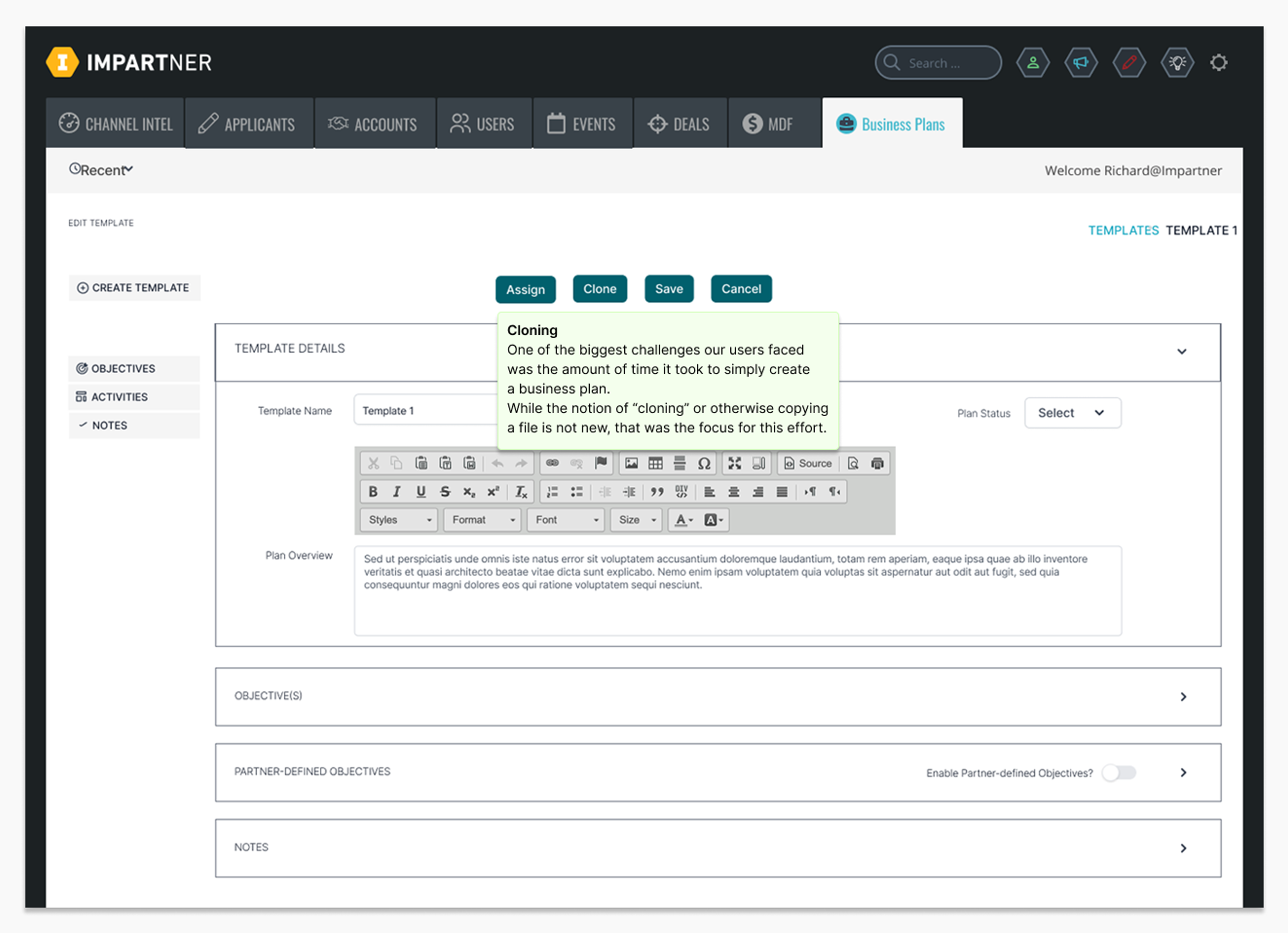
Change: Templates and cloning reduced setup effort per plan and made the path repeatable
Evidence: Journey map synthesis confirmed friction points and guided the design response -
Quality of plans
Baseline: Incomplete submissions due to unclear section requirements and no guidance on what "good" looked like
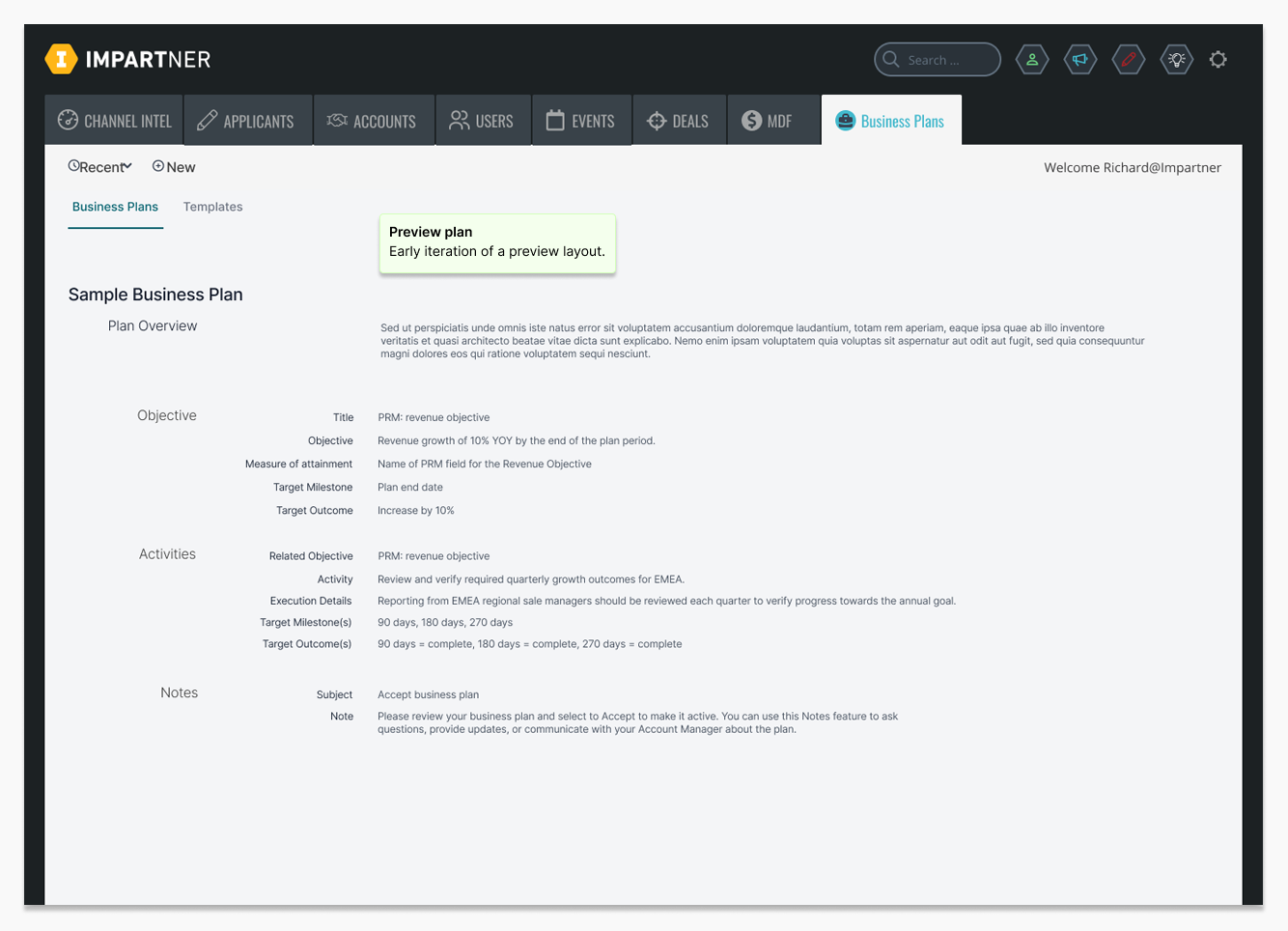
Change: Clearer section prompts and progress visibility added scaffolding for completion
Evidence: Updated IA validated against existing product patterns before implementation -
Cycle time
Baseline: Partners restarted from scratch each planning cycle, adding repeat work and delays
Change: Cloning from prior plans and a more structured editing experience
Evidence: Journey mapping confirmed the repeat-work pattern and validated the workflow choice
- Templates and cloning replaced a blank-slate creation model
- Section structure and progress visibility reduced abandonment mid-flow
- QBR support introduced within the existing feature without a new interaction model
Inherited research synthesized into a proto-persona and journey map as the baseline, with design decisions validated against existing product patterns before implementation
Get in touch
I'd love the opportunity to discuss how my skills and experience can align with and support your organization's goals.