Figma Make AI-prompt design project
AI-prompted design will be the new team sport in software orgs
Abstract:
This page uses a specific project, a patient intake form designed with Figma Make, as a lens for examining how AI design tools change the responsibilities of everyone involved in shipping software. These are not settled conclusions. The short version of where I currently stand: the details are still the design, and no tool changes that.
I look at what this means for product managers whose knowledge of client requirements and regulatory context becomes load-bearing before a single prompt is written, for engineers whose job it is to keep a specification honest and buildable, and for designers whose depth of craft determines whether an AI tool extends their judgment or scales their blind spots.
The argument running through all four sections, including a new one on what I'm calling team prompting, is the same: the people who bring the most knowledge to the specification will get the most out of the tool. That has always been true of collaboration. AI just makes it more consequential.
For this project, I used Figma Make, Figma's AI-powered design generation tool.
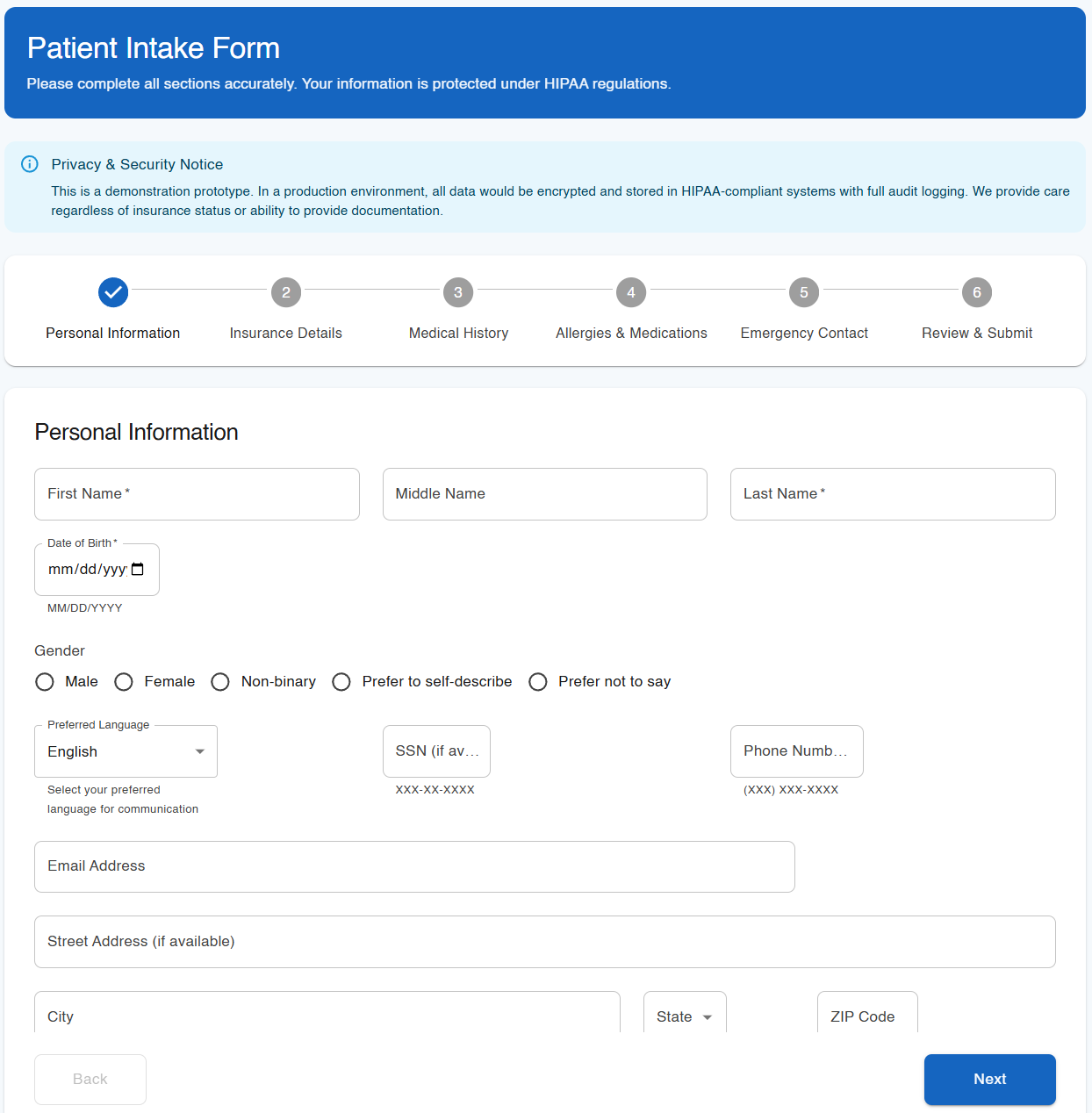
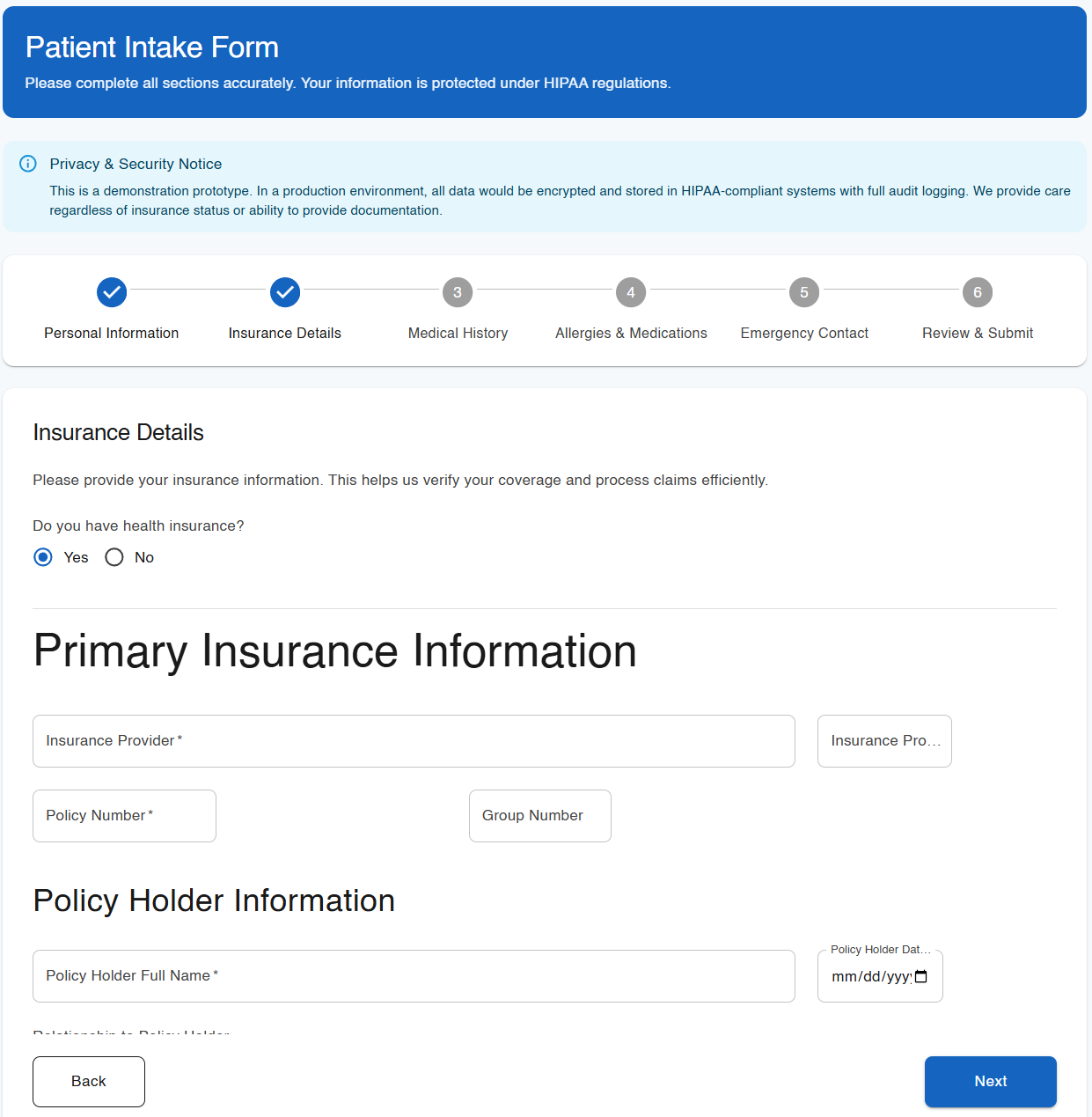
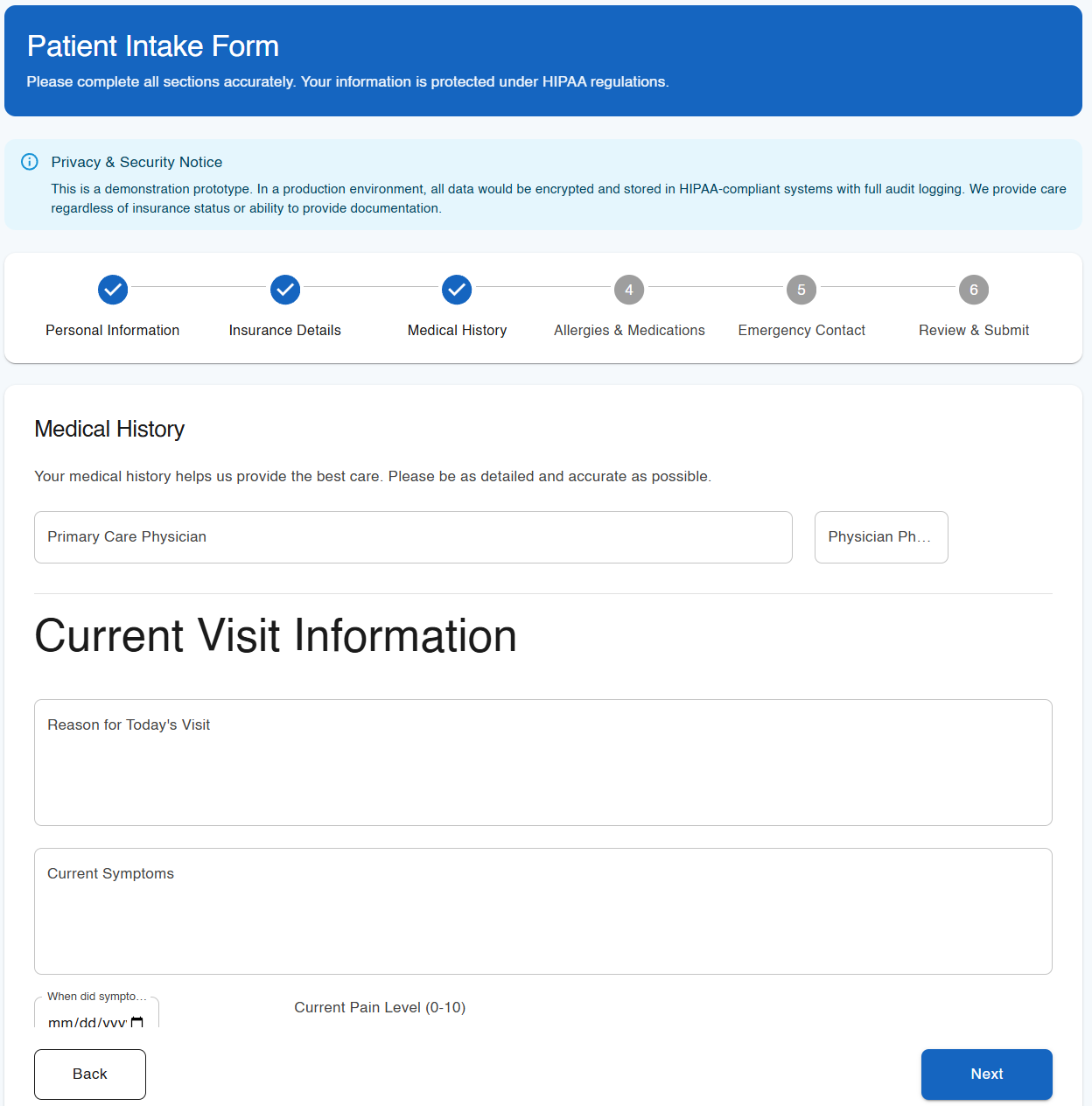
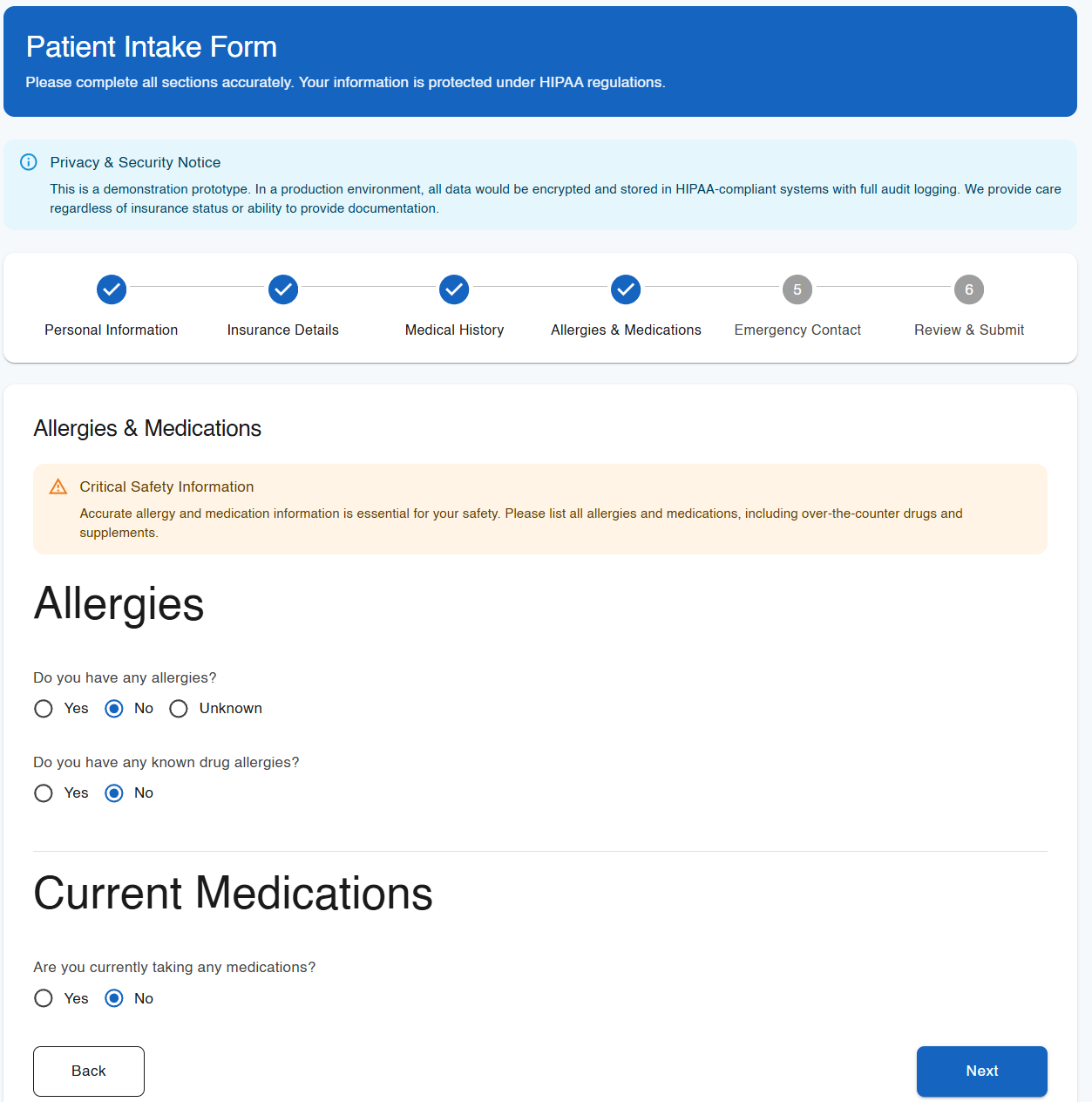
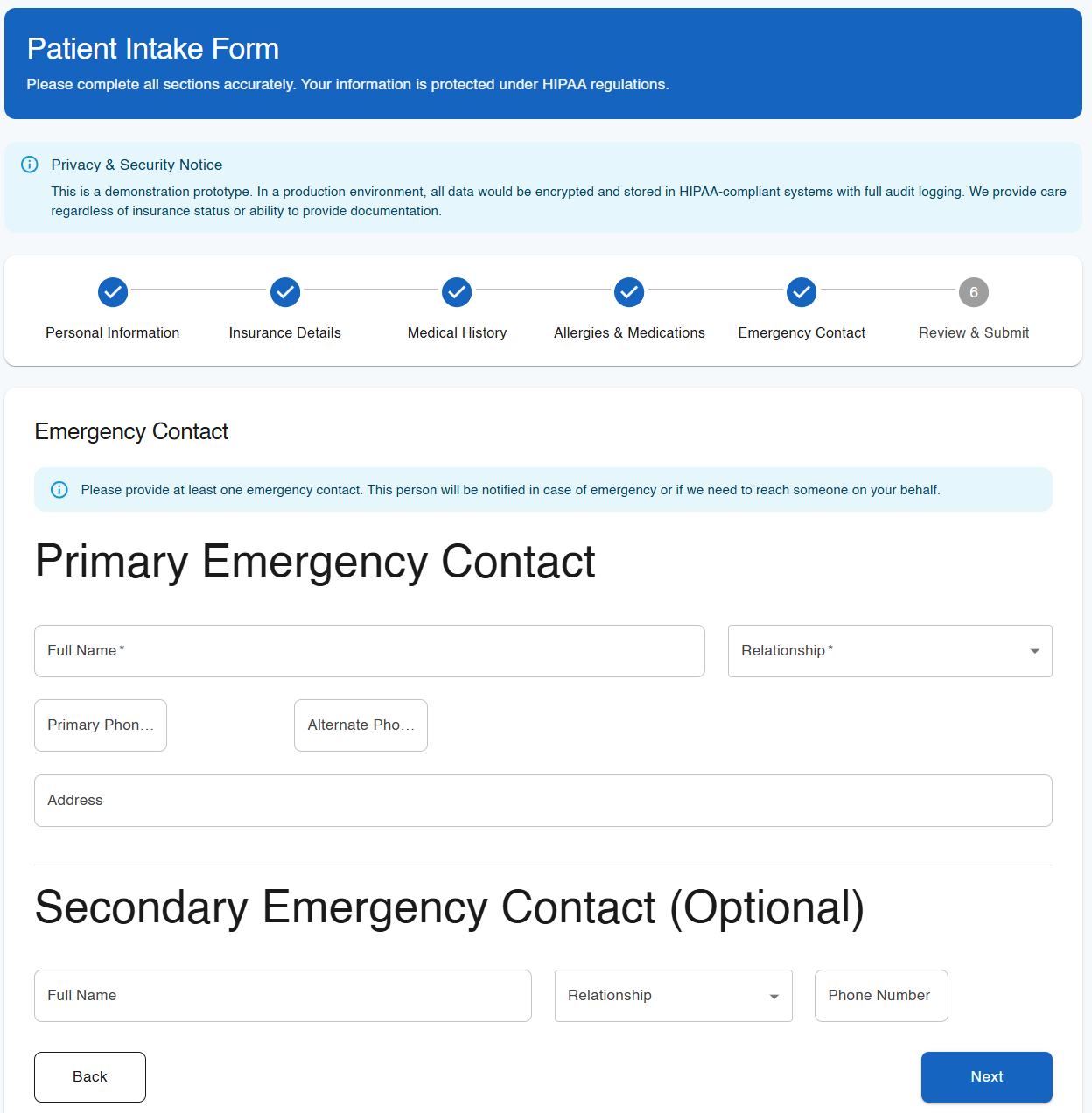
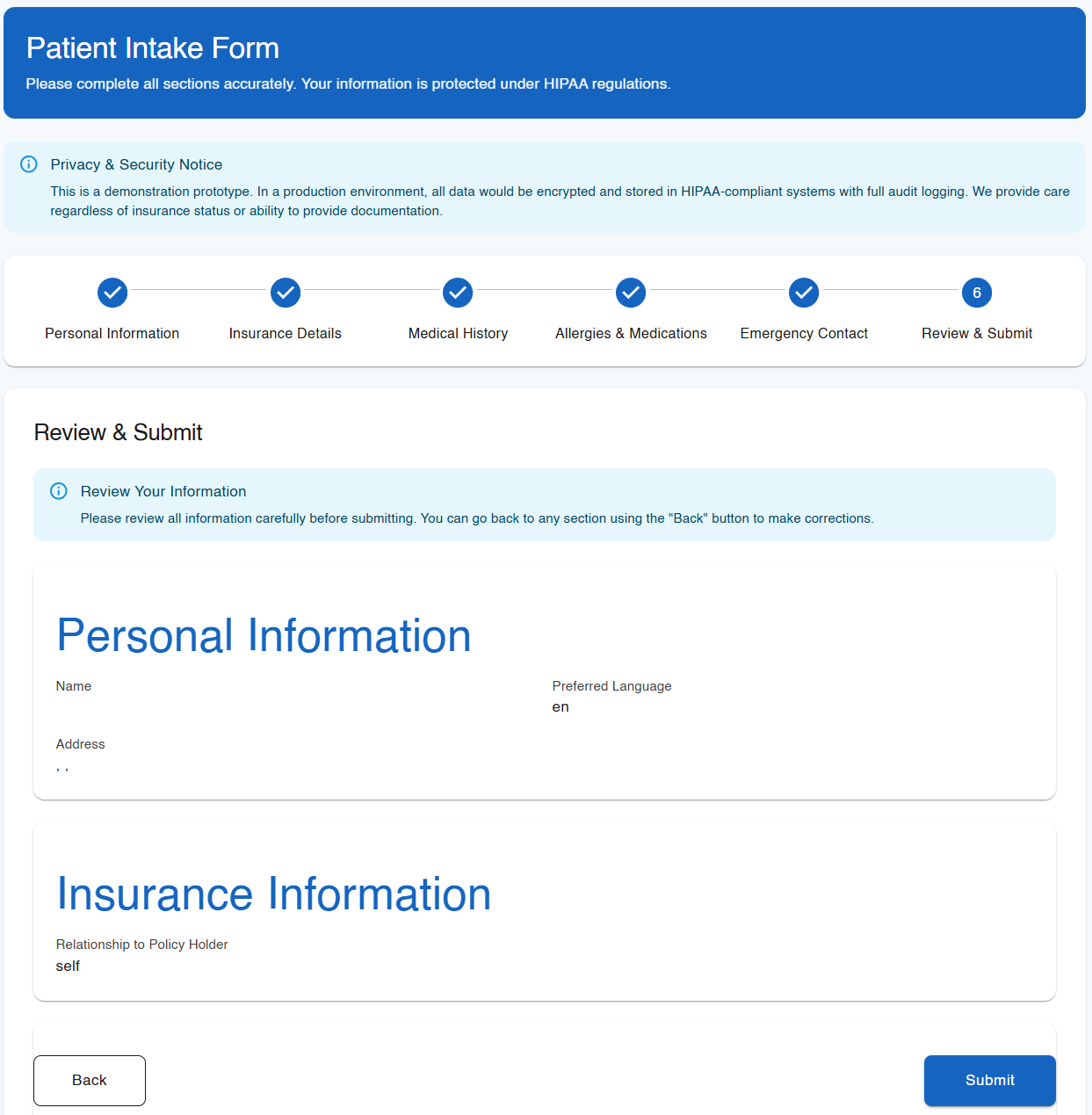
The concept I brought to it was a patient intake form for a doctor's office or emergency room context. Rather than describing the idea loosely and letting the tool interpret it freely, I first drafted a brief specification document, which is available for download, to define the form's structure, intended fields, and context. I then used that spec as the foundation for my prompts, steering the tool through a series of refinements as it generated what it understood me to be asking for.
The exercise quickly surfaced a pattern I had already encountered with Replit and that, frankly, drove me away from that tool: a repeated inability to follow a seemingly simple, straightforward directive about right-sizing input fields. In isolation, this is not a career-ending omission. But it is precisely the kind of detail an experienced designer would both specify and catch.
The same category of miss extends to voice and tone in micro-copy, the correct designation of fields as required versus optional, and the many other specifics that accumulate into an experience that either respects the user or quietly fails them. Product managers will not catch these things. Developers will not catch them either. (nor should they be expected to) A designer who misses them, however, will be held accountable, because in the final product, these details are the design.
One additional observation worth noting: Figma Make offers a UI control that lets you select the AI engine powering your session, but what the default engine actually is remains unclear. For a tool positioned as a professional design resource, that ambiguity deserves to be named.
On product management, client context, and the constraints no prompt will think to mention
In a team prompting context, the product manager's role becomes even more load-bearing than usual. Consider a patient intake form built for hospitals and clinics. The end users sitting in the waiting room filling out the form are not the only stakeholders whose needs have to be represented in the specification. The organizations purchasing and deploying the software, the hospital administrators, compliance officers, and clinical staff, have their own requirements, and those requirements are often non-negotiable. A PM who understands the purchasing context knows which fields are legally required, which disclosures must appear and in what form, and which design choices will create liability rather than resolve it. None of that knowledge lives in a prompt by default. It has to be brought to the table deliberately, before the tool runs, by someone whose job it is to hold that context.
This is one of the clearest arguments for why team prompting is not just a nice collaborative ritual but a practical necessity. The AI tool will build what it is told to build. Getting the specification right, and right in ways that account for legal, regulatory, and client-side constraints, is precisely the contribution a strong product manager makes to that process.
On the engineers whose experience ensures team success
In a team prompting context, a genuinely engaged engineering voice is not optional. It is the thing that keeps the specification honest. Designers and product managers, left to their own devices, are capable of speccing what engineers sometimes call a flying car: something conceptually appealing, perhaps even visually compelling in a prototype, but either unbuildable within real constraints or so performance-degraded in execution that it defeats its own purpose. A well-designed patient intake form that takes eleven seconds to load in a hospital waiting room, or that times out under network conditions common in older clinical facilities, is not a well-designed patient intake form. An engineer in the room catches that before it becomes a prompt.
The technical considerations go further than feasibility and performance. A patient intake form transmits sensitive data: diagnoses, insurance information, dates of birth, contact details, all of it protected under HIPAA and subject to the broader obligations around personally identifiable information. How that data is handled at the API layer, how it is encrypted in transit, what third-party services it touches and whether those services are compliant, these are not afterthoughts to be sorted out in a later sprint. They are constraints that belong in the specification from the start. An engineer who understands the regulatory landscape around healthcare data will surface those requirements before the tool runs, not after the prototype has already made assumptions that are expensive to unwind.
There is a quieter category of contribution worth naming as well. Engineers often hold institutional knowledge about the systems a new interface will have to connect with: legacy EHR platforms, authentication layers, data validation requirements that exist not because anyone designed them but because they accumulated over years of incremental decisions. That knowledge shapes what is actually possible, and it rarely surfaces unless someone with that context is in the room and invited to speak.
On AI-assisted ideation and the case for collaborative prompting
Pair programming has been a fixture of engineering culture for years, built on a simple premise: two sets of eyes will catch what one misses, and the conversation between them often produces something neither person would have reached alone. I can see an analogous practice emerging on the design and product side, and for now I'd call it team prompting.
The working session I have in mind looks something like this: a designer, a product manager, and an engineer sit down together not to review a completed spec but to draft one collaboratively, with the explicit goal of handing it to an AI tool. Each discipline brings what it sees most clearly. The designer brings the constraints of usability, accessibility, and craft. The product manager brings the user's job-to-be-done and the relevant business context. The engineer brings the technical constraints that separate a solution that is merely possible from one that is actually viable. The AI tool, given that collectively-authored specification, generates a first prototype for the team to review and revise together.
This is not entirely unlike what the best cross-functional teams already do informally. But AI compresses the feedback loop to the point where the initial specification becomes the most consequential artifact in the whole process. Getting it right before the tool runs is the new pre-work. That puts a new kind of premium on structured, cross-disciplinary thinking, exactly the kind that has always been valuable but rarely been urgent.
A perspective on design craft, and what AI exposes about its absence
The details are the design. This is not a slogan. It is a working description of where the discipline actually lives. In a patient intake form, the details are: whether a field is marked required or optional, and marked correctly. Whether the micro-copy asking for a date of birth reads like a form or like a person. Whether the input fields are sized to reflect the data they are meant to hold, so that a field asking for a two-digit state abbreviation does not present itself at the same width as a field asking for a street address. These are not finishing touches. They are the substance of the work. Product managers will not catch them. Developers will not catch them. A designer who misses them will answer for them.
What AI design tools expose, with some clarity, is the difference between a designer who can operate the instruments and one who understands the music. A junior designer working with a tool like Figma Make may produce something that looks finished. The layout resolves. The components are recognizable. But the layer of judgment that determines whether the output is actually right, whether the hierarchy serves the user's task, whether the language respects the context, whether the form asks for information in the order that matches how a patient actually thinks, that layer requires something that cannot be prompted into existence. It comes from years of looking closely at the work, understanding why a decision holds up, and having been wrong enough times to know the difference.
This is not an argument against junior designers. Every experienced designer was once one. It is an argument for understanding what role depth of craft plays in a team prompting context specifically. The designer in that room is not just a stakeholder with aesthetic preferences. They are the person responsible for translating the team's collective intent into a specification precise enough that the AI tool has a chance of getting it right, and experienced enough to recognize when the output falls short. That is a job that rewards accumulated knowledge. As these tools become more capable and more widely adopted, the designers who have done that accumulation will find that AI extends their reach considerably. The ones who haven't will find that it mostly scales their blind spots.
“The most important rule is 'Build on the ideas of others.'”
— Tim Brown, IDEO
Below are some images of the patient intake form I created using Figma Make.